Table of Contents
Toggle“If I was down to my last dollar, I’d spend it on PR.”
That’s not just a spicy quote by Bill Gates, it’s strategy. And it’s still true today.
Because while marketing is loud, PR is heard. It’s the difference between buying a billboard that says you’re awesome… and getting The New York Times to say it for you.
Public Relations (PR) marketing is where credibility meets visibility. It’s not just about good press, it’s about trust, authority, and reputation. And no, it’s not the same thing as marketing. That’s like saying coffee and Red Bull are interchangeable. Sure, both give you a buzz, but one comes with substance. The other? Jitters.
In this post, we’re going to break down exactly what PR marketing is, how it differs from traditional marketing, and how to use it to make your brand bigger than your ad budget.
No fluff. No corporate babble. Just real-world tactics, strategies that work, and one or two moments where you might think, “Ah, now that makes sense.”
Let’s clear the smoke and mirrors. PR marketing isn’t magic, it’s a method. And we’re about to walk through it.
What Is PR Marketing?
PR marketing is what happens when you stop shouting and start earning attention.
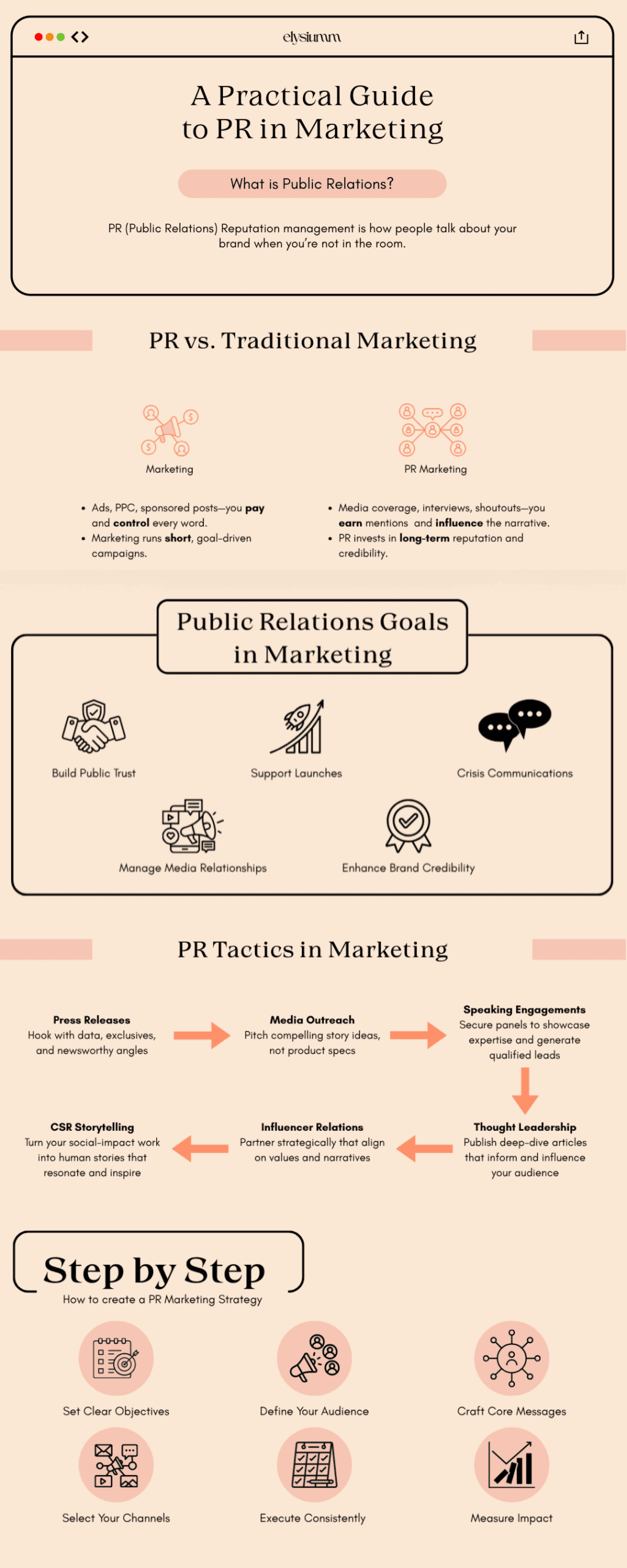
At its core, PR (Public Relations) is about reputation management. It’s how people talk about your brand when you’re not in the room. PR marketing takes that one step further. It uses PR tactics as part of your marketing strategy.
It means not just creating demand but building credibility. It means amplifying your marketing campaigns by getting other people (especially the media) to talk about them for you. No, it’s not free advertising. It’s better.
Where marketing says, “Buy this,” PR says, “Here’s why people are paying attention.”
How PR Differs from Traditional Marketing
PR is subtle. Marketing? Not so much.
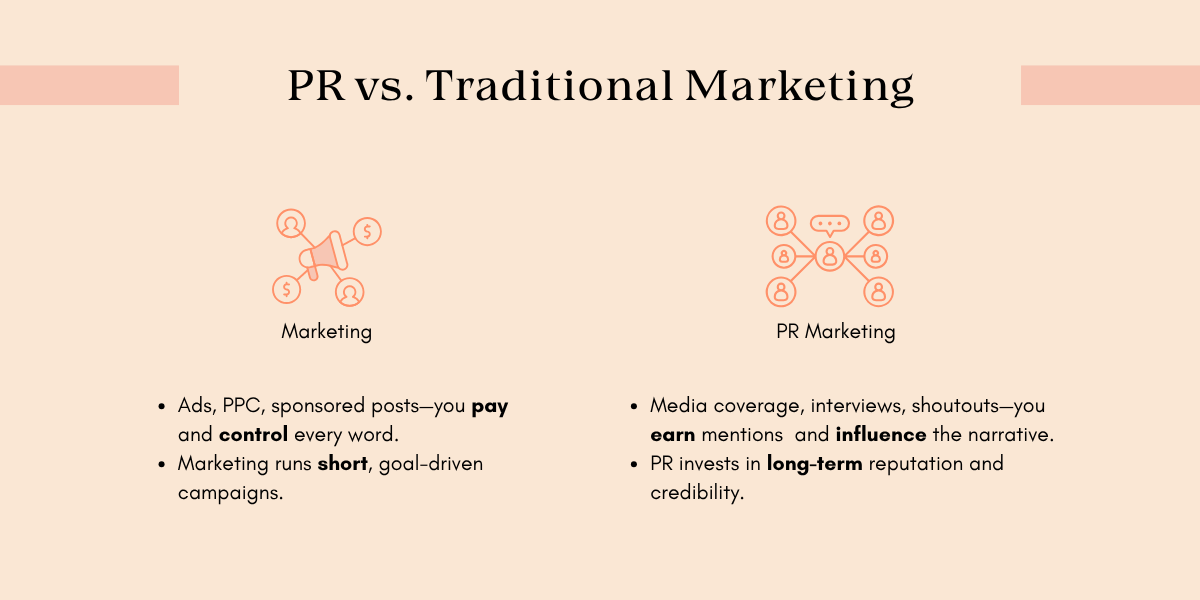
Here’s how they break down:
- Marketing is usually paid. Ads, PPC, sponsored posts. You control the message.
- PR is mostly earned. Media coverage, interviews, shoutouts. You influence the message.
PR builds trust through third-party validation. Marketing builds reach through direct messaging. One is the whisper campaign. The other is the megaphone.
Also: PR plays the long game. It focuses on reputation, not just quarterly goals. Marketing is sprinting. PR is chess.
Key Goals of PR in a Marketing Context
PR isn’t just for cleaning up after a disaster. In fact, if you’re only thinking about PR after things go sideways, you’re doing it wrong.
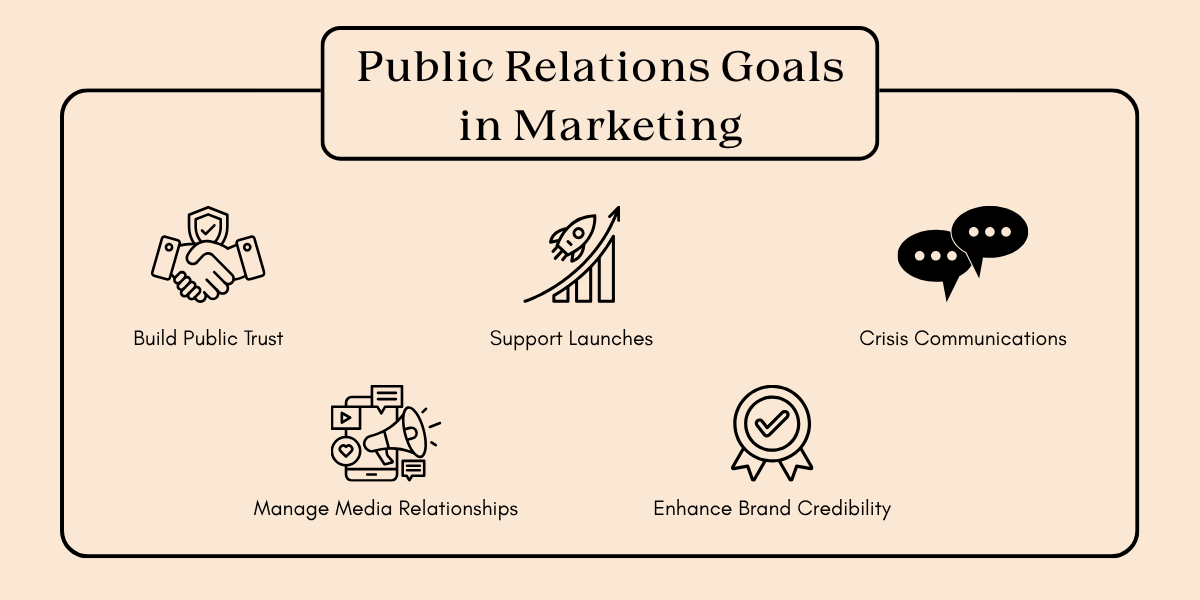
Here’s what PR should be doing before and during your marketing efforts:
- Build public trust: You can’t buy loyalty. You have to earn it.
- Enhance brand credibility: A headline in a respected outlet beats an ad every time.
- Manage relationships with the media: Journalists need stories. You have stories. Match made in ROI heaven.
- Crisis comms: Get ahead of the fire before it becomes a wildfire.
- Support launches: New product? Great. Now get it into the right hands and headlines.
PR Tactics Used in Marketing
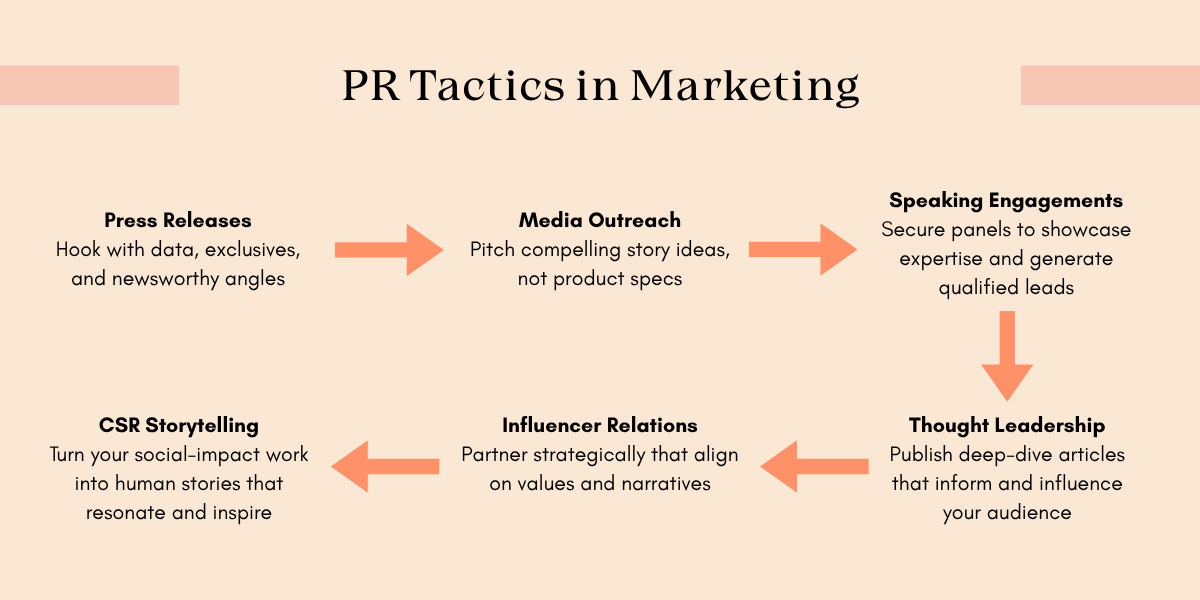
PR marketing isn’t just schmoozing journalists or writing press releases. That might’ve worked in 2003. Today, it’s a mix of digital savvy and narrative control.
Here’s what you should have in your PR toolkit:
- Press releases: Still useful. Still boring. Make them newsworthy.
- Media outreach: Pitch stories, not products.
- Speaking engagements: Industry events = authority + lead gen.
- Thought leadership: Write articles people actually want to read.
- Influencer relations: But make it strategic, not desperate.
- CSR storytelling: If you’re doing good, don’t whisper it.
Benefits of Integrating PR into Your Marketing Strategy
If you’re only running ads and crossing your fingers, you’re missing out.
Here’s what happens when PR and marketing team up:
- More credibility: Third-party mentions beat self-promotion.
- Better SEO: High-authority backlinks from media = traffic + rankings.
- Trust equity: Customers may not remember your ad, but they’ll remember the article that made them trust you.
- Social proof: PR gives you quotables and coverage you can recycle everywhere.
It’s not about choosing between PR and marketing. It’s about knowing they’re better together.
How to Create a PR Marketing Strategy
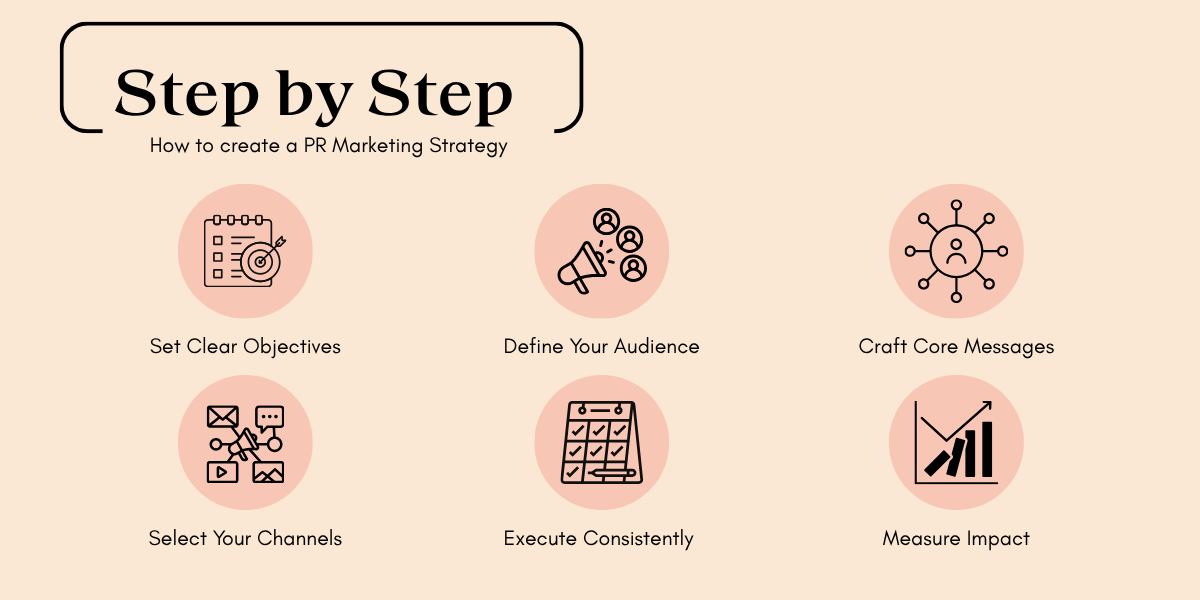
Let’s get tactical. Here’s how to build a PR strategy that actually moves the needle:
- Set objectives: Awareness, trust, sentiment, authority. Pick your goal. Then reverse engineer it.
- Define your audience: Not just your customers. Who influences them? Journalists? Creators? Industry peers?
- Craft your core messages: Say something worth repeating. That’s half the battle.
- Pick your channels: Is this story for tech blogs? Mainstream media? LinkedIn? Choose your battlefield.
- Execute consistently: PR isn’t a one-off email blast. It’s a rhythm.
- Measure your results: Track coverage, backlinks, share of voice, and brand mentions. Vanity metrics? Not helpful.
PR vs Advertising: When to Use Each
Both have their place. But they are not interchangeable.
Use PR when:
- You want to build long-term credibility
- You need to control or influence public perception
- You’re launching a product, hosting an event, or announcing something newsworthy
Use Advertising when:
- You want immediate traffic or conversions
- You’re testing offers or creative
- You need full control over the message and timing
PR is a slow burn with big dividends. Ads are the spark. Use both—but for the right reasons.
Top Tools for PR Marketing
Want to get serious about PR? You’ll need more than a Gmail account.
Here are tools that actually help:
- Cision: Media database + press release distribution powerhouse
- Muck Rack: Real-time journalist search, pitching, and tracking
- CoverageBook: Create beautiful PR reports without crying into spreadsheets
- Meltwater: Media monitoring and competitive benchmarking
- HARO (Help A Reporter Out): Free way to connect with journalists looking for sources
These tools save time, track results, and help you avoid spamming the wrong editor.
Common Misconceptions About PR
Let’s pop a few bubbles.
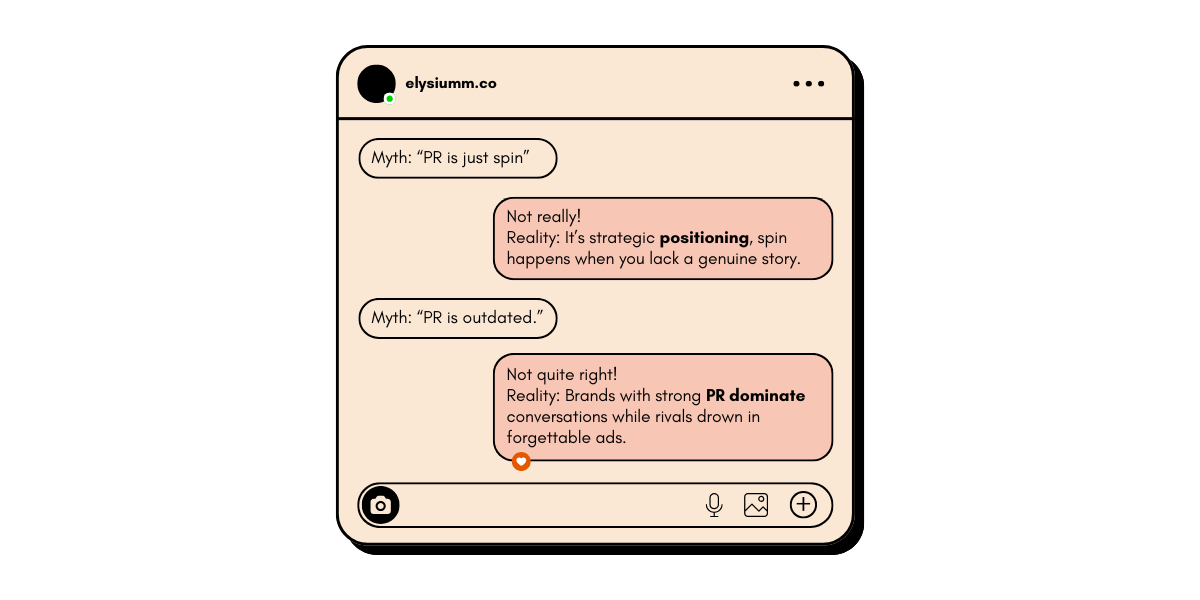
- “PR is just spin.” No. It’s positioning. Spin is what you do when you’ve got no story.
- “PR only matters during a crisis.” False. If you wait until you’re on fire, PR can only do damage control, not brand building.
- “You can’t measure PR.” Wrong. You can. Just not with CPC and bounce rate. Think coverage quality, sentiment, media reach, and backlinks.
- “PR is outdated.” Tell that to the brands being talked about while their competitors are buying ads no one remembers.
PR isn’t a relic. It’s your reputation engine.
The Future of PR in a Digital World
PR is evolving. Fast. Just like everything else.
Influencer marketing isn’t just a fad. It’s modern PR. Reddit threads, LinkedIn posts, even viral tweets, all part of the reputation game now.
Here’s what’s next:
- Real-time reputation management: One tweet can become a headline.
- Data-driven PR: AI can help analyze sentiment, trends, and media impact.
- Multimedia storytelling: Think beyond the press release. Podcasts. Reels. Short-form video.
- Owned + earned synergy: Your blog fuels media pitches. Your media coverage fuels your newsletter. It’s all connected.
PR is no longer just about controlling the narrative. It’s about participating in it strategically, creatively, and fearlessly.
Conclusion
Here’s the bottom line: PR isn’t just a support act for marketing. It’s a strategy of its own.
It’s how you get people to talk about you without paying them to do it. It’s how you influence perception, shape narratives, and stay relevant long after your ad budget is gone.
Marketing may drive clicks, but PR builds trust. And trust? That’s the currency your brand can’t afford to run out of.
So whether you’re launching a new product, fixing a reputation hiccup, or just trying to earn attention in a world flooded with noise, PR is your secret weapon. Not a luxury. Not an afterthought.
Make it part of your strategy. Not because it’s trendy. But because it works.
Your brand story’s already being told. PR lets you help write the script.
FAQ
PR, or Public Relations, in marketing refers to managing how a brand is perceived by the public. It involves building trust, securing media coverage, and shaping brand reputation. Unlike direct advertising, PR focuses on earned media and creating positive narratives to support overall marketing goals.
The seven main types of PR are:
- Media Relations
- Community Relations
- Crisis Management
- Public Affairs
- Internal Communications
- Event Management
- Investor Relations
Each type serves a unique audience and goal, helping brands manage communication across different stakeholders.
PR in social media involves using platforms like Twitter, LinkedIn, and Instagram to manage brand reputation, communicate key messages, and engage with audiences. It includes real-time crisis response, influencer collaboration, and amplifying media coverage. Social PR is fast, public, and directly affects brand perception.
A PR marketing job focuses on promoting a brand through earned media, press outreach, public messaging, and strategic communication. Roles may include writing press releases, managing media relationships, coordinating events, and monitoring brand sentiment. The goal is to build credibility and support marketing campaigns through storytelling and exposure.