Table of Contents
ToggleKey Takeaways
Push marketing is a strategy where brands actively promote products or services to the audience, regardless of whether they’re looking for them.
It relies on direct channels like ads, emails, SMS, pop-ups, and influencer endorsements to get quick visibility.
The goal is to generate immediate attention and action, especially useful during launches, flash sales, or brand awareness campaigns.
Push marketing gives businesses control over timing, placement, and frequency of messaging.
Tactics include audience targeting, short-form messaging, and selecting the right channel (social, SMS, email, etc.) based on audience habits.
It’s effective for short-term wins, like driving traffic or boosting sales during specific events or promotions.
When overused, it can lead to ad fatigue, unsubscribes, and negative brand sentiment—making relevance and timing critical.
Best practices include segmenting audiences, personalizing messages, offering easy opt-outs, and keeping brand tone consistent.
Low-budget push strategies can start with boosted social posts, SMS campaigns, and DIY email tools like Mailchimp.
Combining push and pull marketing creates a balanced approach, push for visibility, pull for long-term loyalty.
Push marketing is that friend who always tells you about sales at Target, even though you kinda didn’t ask – it’s a strategy that reaches out to people, whether they want it or not! Customers don’t have to search for your product. Push marketing puts your message directly in front of them, no matter if they’re ready or even looking to buy.
Push marketing has been around for a really long time, and is absolutely everywhere – you’ll see it in the one billion promo messages sat in your inbox! It’s in the sidebars of your favorite blogs and in those pop-up ads that say, “Get 20% off your first order if you sign up” – it also appears in display ads that seem to know what you’ve been thinking about, and make you feel eerily certain that your phone’s listening to you!
Even if it feels intrusive at times, push marketing’s main strength is grabbing attention quickly. If you’ve got a new product or a sale that ends soon, efficient push marketing makes sure the right people see it fast by delivering your message where it’s needed most – at the moment it matters.
You might wonder – why is push marketing important? More than anything, it’s important because it helps your brand be seen and known. When used right, it shows your message at just the right time, helping you reach customers before they even think about needing you! Whether you want to boost sales, build your brand, or promote a seasonal event, knowing when and how to use push marketing can make all the difference!
And one serious plus of push marketing is its malleability – there’s a million ways it can be tailored to fit your goals! And that’s why this kind of marketing gets results and help your business grow faster than you might think.
So, are you ready to learn how to use push marketing for your business? Let’s get going!
Push vs. Pull Marketing: What’s the Difference?
First off, let’s clear up the confusion between push and pull marketing – two terms that get thrown around in marketing circles like confetti at a New Year’s Eve party.
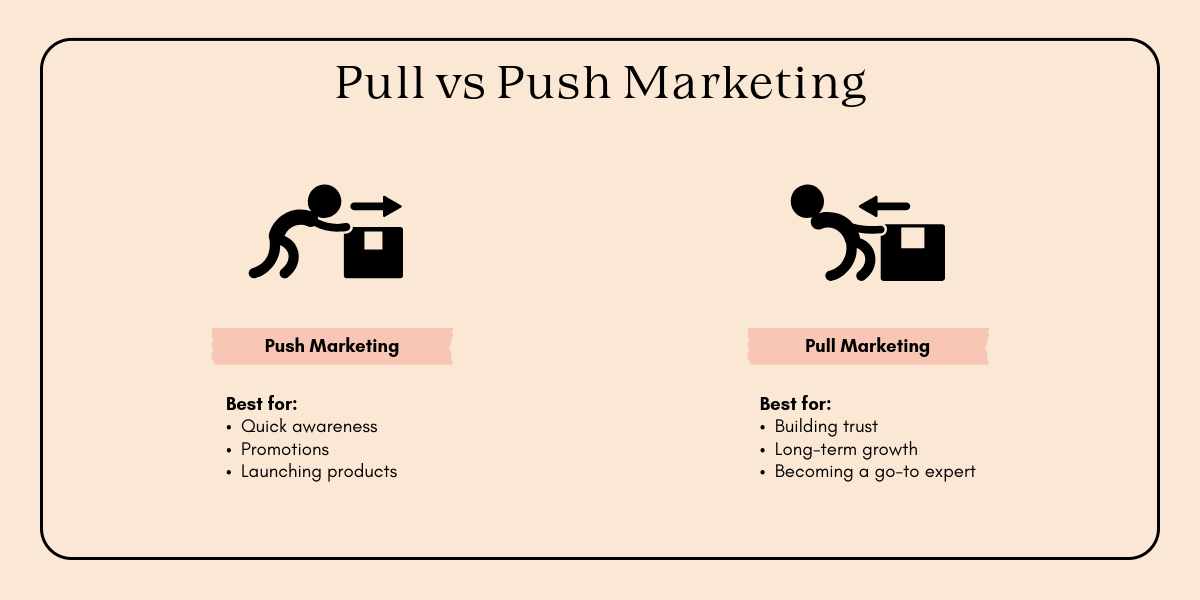
Push Marketing is like invites itself to the party. It shows up, unannounced, and starts mingling with your guests (aka, potential customers). Basically, it’s marketing that comes to you! As the brand, you control the message, when it’s delivered, and how often – common examples include email blasts, push notifications, social media ads, or even good ol’ fashioned TV commercials.
You know those annoying pop-up ads that appear on websites when you’re just minding your business? Yep, that’s also push marketing in action. The key takeaway here: you’re reaching out to your audience, whether they’re actively looking for you or not!
On the flip side, we’ve got Pull Marketing. Now, imagine you’re hosting a party, but instead of being dragged in, your guests knock on the door because they want to be there – okay, maybe this isn’t the best analogy. But you get the point – they’re already interested, seeking out the information, or solution you provide! Pull marketing is all about attracting people to your brand – think SEO, content marketing, and social media engagement. You’re pulling people in by making them actually want to come to you, and seek you out voluntarily.
For example, when someone types “best hiking shoes” into Google and finds your blog post comparing brands, that’s some great pull marketing – the person is actively looking for information, and your content is designed to meet their needs!
Now, don’t forget – both strategies are important. You don’t need to choose one over the other, and in fact, combining the two is a very powerful way to increase visibility and grow your brand. This way, you’ve got yourself a dynamic duo – push marketing gets your name out there, while pull marketing builds trust and authority! Essentially, push gets people in the door, and pull makes them stick around for the long haul – you just need to find the right balance that works for your business.
How Push Marketing Works
So, let’s break this down so you can understand that push marketing isn’t some high-tech magic trick – it’s just about making sure your message gets in front of the right people at the right time without being OTT about it!
Audience Targeting
First things first, you gotta know who you’re talking to – that’s audience targeting. Think of it like sending a party invite… you probably wouldn’t invite the entire neighborhood, right? No, you’d handpick the people who will actually show up and enjoy the party – same thing goes for push marketing.
You start by figuring out who’s most likely to actually care about what you’re offering. Are you selling eco-friendly yoga mats? Your audience is probably health-conscious millennials or fitness enthusiasts. A software company selling a new productivity tool? Your target could be small businesses or remote teams.
Here’s where things get kinda fun: you can target your audience with laser precision using demographic data (age, gender, location), psychographic data (interests, hobbies, values), or even behavioral data (what websites they visit, what products they’ve clicked on). Tools like Meta Ads and Google Ads are seriously your best friends here – they let you create hyper-targeted ads based on your audience’s interests, online behavior, and even what they had for lunch (well, not literally that last one, but you get the idea)!
Message Creation
Now that you know who you’re talking to, let’s get to figuring out what you’re going to say. You don’t want to show up empty-handed, right? Crafting a killer message basically means creating an invite that makes people say, “Heck yeah, I’m in!”
For push marketing, your message should be short, sweet, and direct for those shortened 2025 attention spans. You don’t need to write the next Great American Novel here – the keys here are to keep it relevant and solve a problem for your audience. If your potential eco-friendly customer is tired of their worn-out yoga mat, highlight the comfort, sustainability, and unique features of yours! Remember, your goal is to grab attention, so use catchy headlines and create a sense of urgency – like limited-time offers or “act now” messages. Think about it as a “FOMO” effect: people love a good deal, and they really don’t want to miss out.
Channel Selection
Once you’ve got your target audience and an impactful message, you’ll need to figure out where you’re going to share it. Here’s where the fun really starts, because push marketing can happen almost anywhere online! You’ve got plenty of options:
- Social Ads: Instagram, Facebook, TikTok – your audience is likely scrolling through these platforms for prolonged periods of time every day, so why not meet them where they already are? Social ads are highly visual, so make sure your message stands out with bright images or video!
- SMS Campaigns: Okay, it might sound a little old school, but don’t underestimate the power of a text message. People check their phones constantly, and SMS campaigns have high open rates – just make sure you’ve got the opt-in from your audience before hitting them with a text.
- Email Blasts: Yes, email is genuinely still relevant (and always will be). Email campaigns are perfect for delivering tailored, valuable content directly to someone’s inbox – bonus points if you segment your email list so people only get emails that are relevant to them (no one likes generic spam)!
- Influencer Shoutouts: If your audience spends time following influencers, you should absolutely consider partnering with one. They can promote your product or service in a way that feels organic and trustworthy – it’s like getting a friend recommendation, but cooler!
The trick is picking the channel that works best for your specific audience – if you’re targeting younger people, TikTok and Instagram might be your playground. Older crowds? Maybe email or SMS works better – point is, it’s crucial to meet your audience where they actually hang out.
Popular Tools & Platforms
Now, none of this happens without some serious tools to help you track, manage, and optimize your push marketing efforts. You really don’t need to be a tech-head to use these – just smart enough to know how to get them to do the hard graft for you!
- Google Ads & Meta Ads: These are basically your power tools for targeting the right people with the right message, letting you build highly specific ad campaigns and easily analyze the results.
- Mailchimp: If you’re all about email, Mailchimp is not only a classic but a total must! It’s a tool that helps you create beautiful emails, segment your audience, and track your open rates like a pro.
- Hootsuite: Want to push your message on multiple social platforms at once? Hootsuite’s your girl – you can schedule posts, track engagement, and analyze social media performance from one dashboard!
- Textedly: For SMS marketing, Textedly allows you to send out mass texts with ease. But remember – you’ve got to be very mindful of quality and frequency. Spammy annoying texts are a surefire way for your brand to lose trust and respect!
If you’re going for any form of paid ads, our ultimate guide to paid advertising in 2025 is also a total must-read!
Tips on Getting Started with Low-Budget Options
Okay, now for the fun part: how do you get this all rolling on a budget? Don’t stress – you don’t need to burn a hole in your wallet to start pushing your message! Here’s how to get creative without spending big:
- Organic Social Media: Start with organic content on platforms like Instagram and Facebook. Build your presence with engaging posts, share behind-the-scenes moments, and create a community vibe – then, test small ad spends to amplify your reach.
- DIY Email Campaigns: Platforms like Mailchimp offer free plans for small businesses with up to 500 subscribers. Perfect for getting started without paying a cent!
- SMS with a Twist: If you’re just starting out, try using an SMS service with a free trial or low-cost plan. Just make sure you’ve got explicit consent from your customers to text them first!
- Influencer Partnerships: Look for micro-influencers who have a dedicated, engaged following – they’re often more affordable than big-name influencers, but their recommendations can still drive massive results.
So there you have it! Push marketing is really just about knowing your audience like the back of your hand, so you can craft a message that resonates, choose the right platform, and be smart with the tools you use. And you absolutely can and should start small – no need to go all-in right off the bat before you’ve tested what works best! Start with what you have and grow from there – the beauty of push marketing is that it’s a flexible, adaptable strategy that can evolve with your business.
The Pros and Cons of Push Marketing: Let’s Dive In
Push marketing isn’t a one-size-fits-all solution, but when used right, it can pack a punch. Here’s the lowdown on the good, the bad, and everything in between!
Pros: Why Push Marketing Is Your New Best Friend
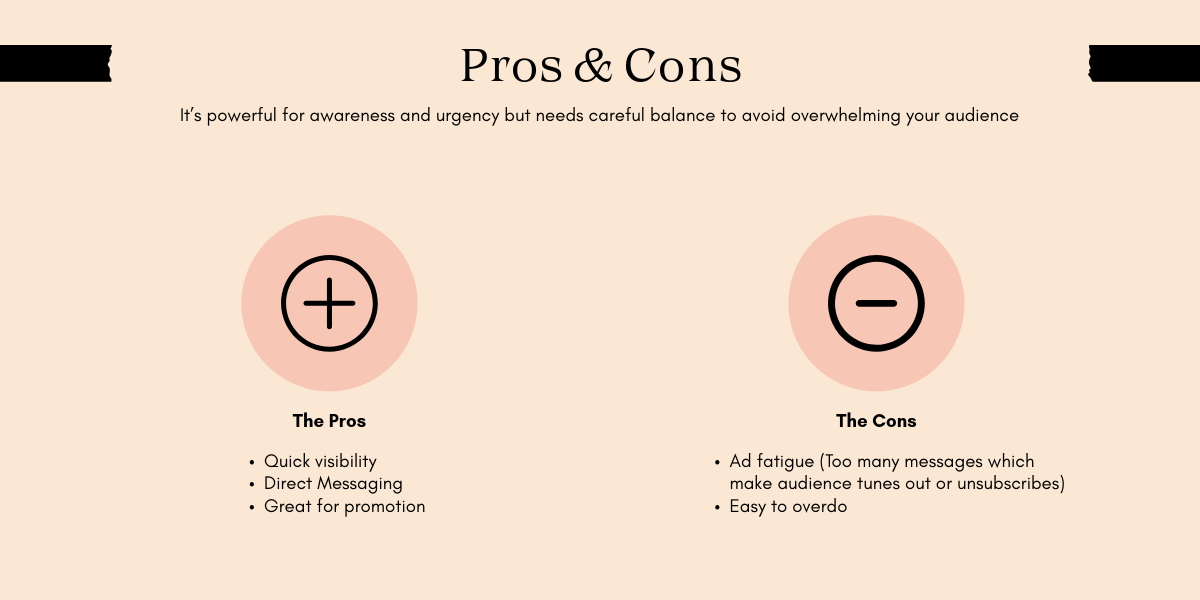
Quick Visibility
Push marketing is pretty much walking into a crowded room and yelling, “Hey, look at me!” It gets you noticed fast – if you’ve got something exciting to show, whether it’s a new product or a limited-time offer, push marketing puts your message front and center.
Direct Messaging
No beating around the bush here – push marketing lets you tell your audience exactly what you want them to know! This is your chance to get straight to the point – with an email, SMS, or even a pop-up ad, your message is clear, concise, and delivered right to the user. No need for fancy metaphors or vague allusions – it’s simply a case of “Here’s what we’ve got, and here’s why you need it.”
Ideal for Promotions or Launches
Push marketing is pretty much built for that “new hotness” moment. If you’re dropping something big – be it a product launch, a flash sale, or a holiday special – push marketing can make a huge impact for those times when you need a megaphone!
Cons: Not All Sunshine and Rainbows
Risk of Ad Fatigue
Here’s the thing: when you’re constantly bombarding your audience with the same message or too many ads, they quickly start to tune out – understandably so! With push marketing, it’s easy to overdo it. If your audience sees your ad too many times without it being relevant or exciting, they might just get annoyed and hit the dreaded “unsubscribe” button or scroll past your ad without a second thought.
Push marketing is really all about balance – do it right, and it can be your best tool for visibility and messaging. Overdo it, and you risk annoying your audience. It’s very much the Goldilocks of marketing strategies – just enough, but not too much!
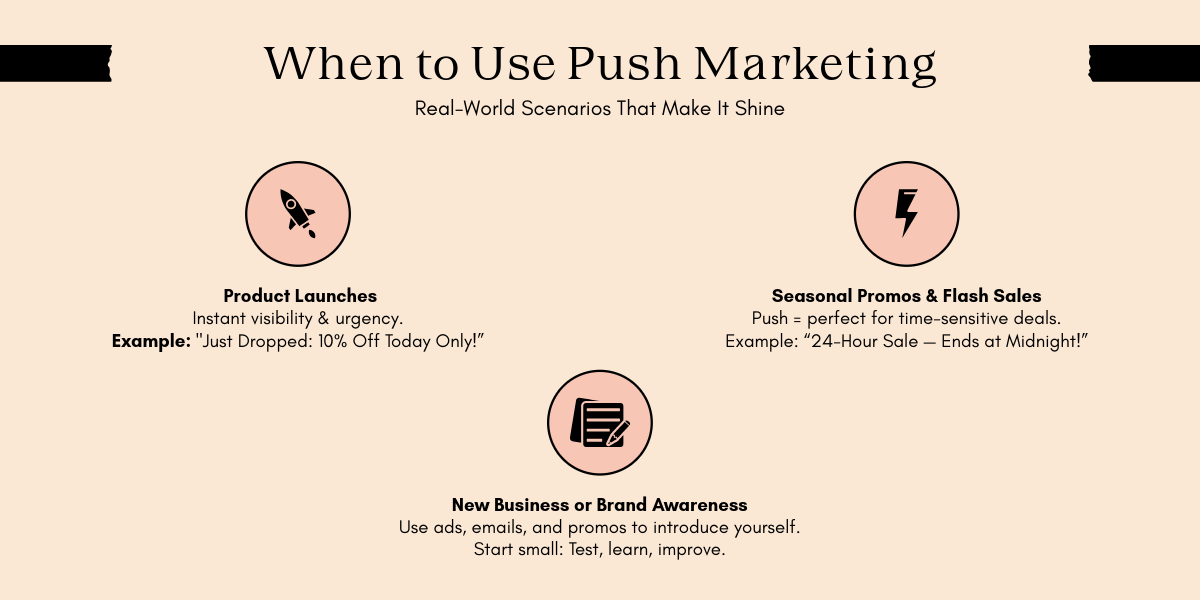
When to Use Push Marketing: Real-World Scenarios
Push marketing can really work wonders in certain situations – let’s dive into when it makes the most sense to go full throttle with those promotional pushes, and when it’s okay to ease into it with a little finesse!
1. E-commerce Product Launches
Got a shiny new product that you’re eager to share with the world? Push marketing is your best friend. Whether it’s an email blast or a targeted social media ad, you’re basically saying, “This thing is so awesome, you don’t want to miss it!” And who doesn’t like to feel like they’re in on something before everyone else?
In this scenario, push marketing helps get the word out immediately to your target audience. You can hit ‘em up with emails or ads that scream urgency – like “Last Chance for 10% Off Our New Product!” It’s fast, direct, and in-your-face, and that’s exactly what you want when you’re introducing something new.
2. Seasonal Promotions or Flash Sales
The holiday season, Black Friday, or even random days where you want to create urgency – flash sales and seasonal promotions are prime territory for push marketing. If it’s the height of summer and you’ve got a scorching hot deal on swimsuits, you’re not waiting around for people to stumble upon your site organically – because you’ve got a high demand, and serious competition! Nope, you’re sending out a cheeky email saying, “Hey, it’s time to cool off in style! Flash Sale Ends at Midnight.”
3. New Business Trying to Build Awareness
So, you’re the new kid on the block. You’ve got a killer product or service, but you’re still figuring out who your audience is and how to make your brand unforgettable – that’s exactly when push marketing swoops in like your business’s superhero cape.
When you’re trying to build awareness from scratch, people do need to know you exist before they can buy from you. So, utilizing some clever push marketing strategies – whether that’s through paid ads, email outreach, or social media promotions – is a really great way to force your brand into the spotlight.
You don’t have to go crazy with this at first – especially since you’re still building that audience! Start small with a few well-targeted campaigns and use the data to guide you. Push marketing here can be about sparking curiosity and starting conversations – over time, as you learn what works best for your audience, you’ll be able to refine and optimize your approach.
Tip: You Don’t Need to Go Full Mad Men to Make It Work
You certainly don’t need a whole marketing team with fancy suits, boardrooms, and a full-fledged campaign to get started. Just start small, test a few simple push tactics like an email campaign or a Facebook ad and see how your audience responds. You’ll be surprised at how well even the basics work when done right – it’s all about learning from those initial tests and tweaking your strategy to fit what your customers want. So, keep it simple, keep it personal, and keep testing – it’s all about progress, not perfection!
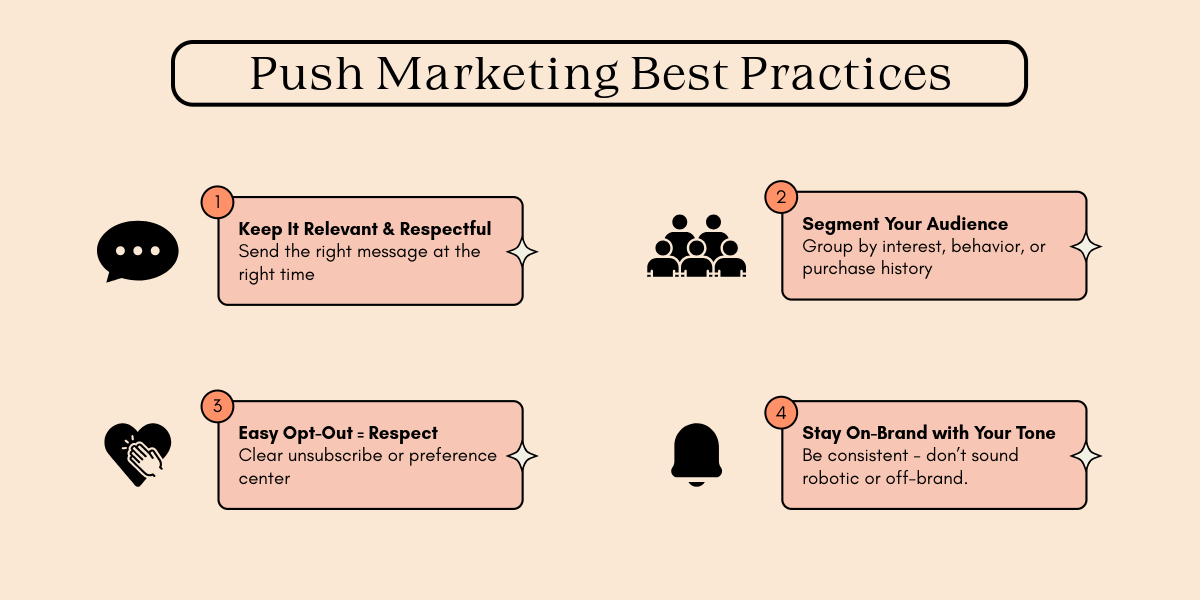
Best Practices for Not Being Annoying (Seriously)
We’ve all been on the receiving end of push marketing which crossed the line from “Hey, check this out!” to “Why are you yelling at me?!”. But there are some easy ways to ensure your push marketing efforts don’t make people want to throw their phone into the nearest river:
Keep It Relevant and Respectful
Absolutely nobody wants to engage with irrelevant messages. So, how do you make sure you’re not the marketing equivalent of that awkward guest? Yet again, we’ve got to stress the most important factor – know your audience! Don’t just send out random promos to everyone on your list – understand who’s on the receiving end of your message. If you’re selling food products, maybe the latest candy sale shouldn’t be sent to a gym bro – save the protein promos for him. Keep it personal and thoughtful, be mindful of context, and make sure your messaging aligns with their needs and interests!
Being relevant also means timing – timing really is everything. Don’t text people at 2 a.m. (unless you’re a club promoter, and even then, let’s chill)! Respect your audience’s time and preferences – it goes a long way in keeping things friendly, and they’re much more likely to see that notification come up during the daytime.
Segment Your Audience
So, I’ve lectured you endlessly about knowing your audience and targeting their messages properly – but how exactly should you go about doing that? Segmenting your audience means breaking them into smaller groups based on things like behaviors, past purchases, or interests. That way, you can tailor your messages efficiently – for example, if someone has been eyeing a specific product but hasn’t pulled the trigger, maybe send them a gentle reminder or a limited-time offer – on the flip side, someone who’s just starting to browse could get a more introductory message.
This creates a win-win scenario: You’re sending more relevant content, and your audience feels like you get them – less overzealous salesperson, more helpful guide who knows what they actually want!
Give Users an Easy Opt-Out
I know, it sounds counterintuitive, doesn’t it? You’re working so hard to get people to engage with your messages, and now I’m telling you to make it easy for them to leave? But hear me out – if you make opting out hard, people will just disregard you altogether.
A simple, easy-to-find opt-out link shows respect for your audience. It tells them, “Hey, we get it. You’re not into this, and that’s okay” – plus, when it’s quick and easy, they’re way less likely to mark you as spam, which keeps your reputation intact!
And here’s a pro tip: Make it easy to adjust preferences, not just unsubscribe. Maybe they don’t want absolutely nothing from you – they just don’t need that one thing right now. Giving them the option to tweak what kind of content they receive (like a weekly digest instead of daily updates) keeps the door open for future engagement.
Keep the Tone Consistent with Your Brand
Lastly, let’s talk tone. You’ve got a brand voice, and you need to stick to it – if you’re known for being friendly, funny, and down-to-earth, you can’t suddenly turn into a corporate robot in your push messages! People will feel like they’re talking to someone else entirely (or worse, someone pretending to be someone else).
Your tone should always be consistent and fit the vibe of your brand – whether you’re cheeky and irreverent or calm and professional, make sure it resonates with your audience and feels natural. The last thing you want is to be sending a promotional email that sounds like it was written by a marketing department that has no idea who you are!
By following these best practices, you’ll be able to use push marketing effectively without annoying the heck out of your audience. Keep things relevant, respectful, and fun, and you’ll create a solid relationship with your customers – one where they don’t mind hearing from you now and then.
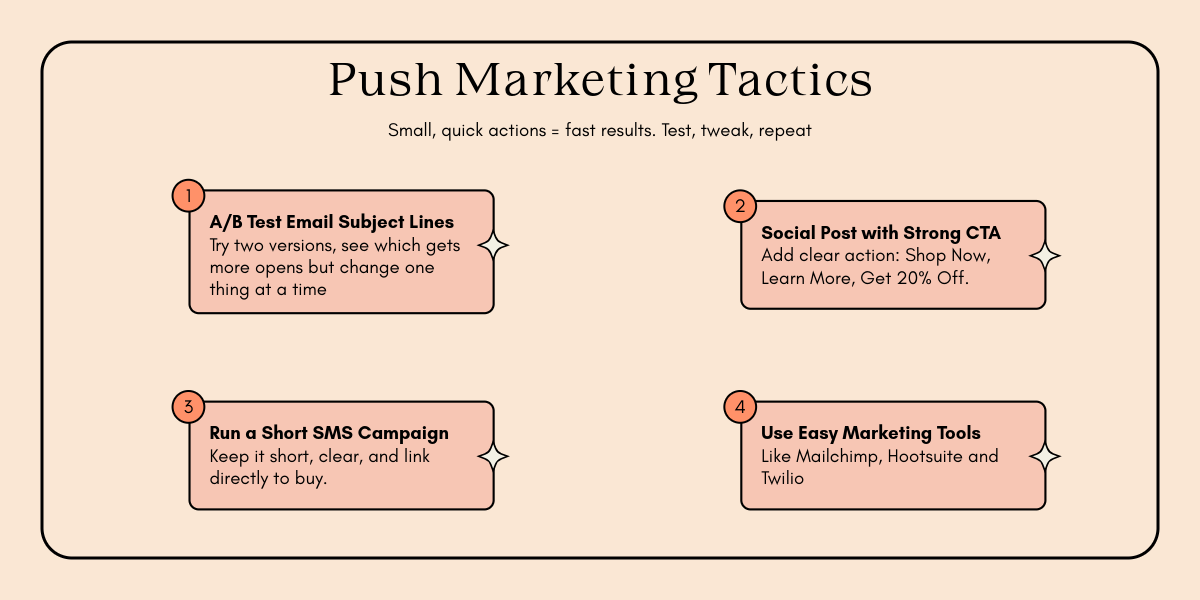
Quick Wins: Push Marketing Tactics You Can Try Today
Okay, let’s get to the good stuff! The real magic happens when you try out a few quick and easy tactics that’ll make your push marketing efforts feel like a breeze. And no, you don’t need a massive budget or a fancy agency – just a little creativity and some testing. Here’s what you can do today to start seeing results!
1. A/B Test an Email Subject Line
So, you’ve got an email ready to go out, but have you considered how many people are actually going to open it? The subject line is your first impression, and we all know first impressions matter. A/B testing is like trying on two different outfits and seeing which one gets more compliments. But with emails, it’s about testing two subject lines to figure out which one makes your audience click “open” instead of “delete.”
It’s as easy as changing up one thing – maybe it’s the tone, the urgency, or even just swapping a word or two. Test something like, “Flash Sale This Weekend, Don’t Miss Out!” vs. “Your Exclusive Weekend Deal Is Here!” You’ll quickly learn what resonates better with your audience, and you can tweak things like emojis, personalization (using their name), or even making it more “you” by being a little cheeky. Just remember: always test one variable at a time to keep it clear, like testing the subject line while keeping the content the same. The goal? Find what makes your subscribers love that little inbox notification from you!
2. Boost a Social Post with a Clear Call-to-Action (CTA)
So, you’ve posted something on social media that you’re pretty proud of – maybe it’s a gorgeous product shot or a witty video. But how do you get people to actually do something after they see it? A clear, compelling call-to-action (CTA) is your secret weapon here. And, no, “Check it out!” doesn’t cut it. You need something punchy, like “Shop Now,” “Learn More,” or “Get 20% Off Today Only!”
But don’t just post and hope for the best – boost it! A little paid boost can take that post from 100 views to 1,000. With a clear CTA in your copy, it makes the decision for your audience easy: “Hey, if you want to save or shop, here’s where to do it.” Try testing different CTAs to see which one gets the most love, and don’t be afraid to experiment with language. Throw in a bit of urgency (“limited time only”) or exclusivity (“just for you”) – that always gets people to click. The bonus? Social platforms usually have nifty targeting options, so you can make sure the right people see it!
3. Run a Short SMS Campaign with a Time-Limited Offer
If you’re not already using SMS marketing, it’s time to hop on the bandwagon – text messages are read way more often than emails, and they have that lovely sense of urgency. So, why not use it to your advantage? Try launching a short and snappy SMS campaign with a time-limited offer. Something like: “Flash Sale! 24hrs Only – 15% OFF EVERYTHING! Use code FLASH15 at checkout.”
The beauty of SMS is immediacy – people will see it, and they’ll see it fast! But keep it brief, make the offer clear, and always include a sense of urgency. Don’t overdo it – one or two well-timed, well-crafted messages are all you need to create buzz. And remember, make it easy for them to act on it by including a link directly to your store or landing page – the faster you get them to the checkout, the better!
4. Include Links or Recommendations for Easy-to-Use Tools
Marketing doesn’t have to be rocket science, and you don’t need to be a tech wizard to make your push marketing campaigns fly. There are tons of tools out there that make the process easier, faster, and way more fun – if you’re feeling overwhelmed by where to start, why not throw in a quick recommendation for a tool that can help?
If you’re running an A/B test, tools like Mailchimp and Kit (formerly ConvertKit) are great for email campaigns. For social media posts, Hootsuite or Buffer make scheduling a breeze. Want to dive into SMS campaigns? Twilio or SimpleTexting can get you up and running in no time. The trick is to find tools that make things less stressful so you can focus on your creative genius, not the technical headaches.
And remember, you don’t have to be an expert – these tools are made for people just like you – marketers who are eager to try out new ideas and make a bigger impact without getting bogged down in the details!
Conclusion: Push Doesn’t Mean Pushy
Let’s clear this up once and for all – push marketing doesn’t mean being a marketing ninja that always finds a way to show up uninvited. It’s not about shouting “BUY NOW” into the void and hoping someone hears it – what push marketing really is, is the art of confidently starting a conversation with your audience, of nudging them toward action without being… you know, that guy!
When you walk into a room, you’re not just shouting your product’s features into the air. You’re gently waving your hand, offering a handshake, and saying, “Hey, I’ve got something you might like, want to chat about it?” You’re not overpowering them – you’re offering value, and you’re making sure your message lands with the right crowd. And when done well, it drives awareness, fuels engagement, and gets you some fantastic results.
The key here is thoughtfulness through timing, relevancy, and personalization, and learning how to balance persistence with respect. It’s like asking someone out on a date – too much, and you’re creepy; too little, and you’ll never hold someone’s attention. But with the right message, at the right time, you’ve got yourself a conversation that could lead somewhere great!
So, push doesn’t mean pushy – it just means you’ve got something to say, and you want the right people to hear it. And if you’re smart about it, you’ll have them listening, not running for the hills!
If you’re tired of sending emails that go straight to the “unsubscribe” pile or running ads that barely get a glance, we’re here to help. Let’s work together to craft a push marketing strategy that’s impactful, engaging, and, most importantly, not annoying. Ready to start pushing the right way? Let’s chat.
FAQ
Push marketing is a strategy where a business actively promotes its products or services directly to customers, with the goal of encouraging them to make a purchase. Think of it as a more direct approach, you’re pushing your message out to the audience through channels like advertising, email campaigns, or in-store promotions. The focus is on driving immediate action, whether that’s a sale, sign-up, or engagement.
Push and pull marketing are two different strategies used to generate consumer interest. Push marketing involves actively pushing your product to consumers through direct tactics, like ads or sales promotions, to encourage immediate purchase. Pull marketing, on the other hand, aims to create demand from the customer side. This is where you create content, build a brand, or offer something so irresistible that customers seek you out on their own, essentially pulling them towards your brand.
A classic example of push marketing would be a store running a limited-time discount or promotion to entice customers to buy right then and there. Think of those pop-up ads you get on your phone, the banners on websites, or email blasts announcing a flash sale. These are all examples of push tactics, delivering a message directly to consumers to spur immediate action.
Nike uses a mix of both push and pull marketing strategies, but it’s especially known for its pull strategy. They create a strong brand presence through emotional marketing, sports endorsements, and influencer partnerships, which makes customers want to engage with their brand. People aren’t just buying Nike because they’re pushed towards it, they’re often seeking it out because of the brand’s influence, image, and the desire to be part of the Nike community. So, while they may also use push tactics in stores and online promotions, Nike’s heart is in the pull strategy, creating demand through brand power.